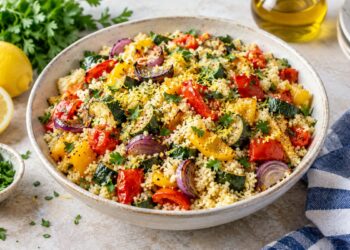

Weeknight cooking becomes easier when meals share ingredients without tasting identical. This five-night plan uses one tray of roasted vegetables, one cooked grain, a lemon-herb dressing, and a pot of lentils as building blocks.
The preparation session
Roast two trays of seasonal vegetables with olive oil, salt, and black pepper. Cook a grain such as bulgur, farro, or brown rice. Simmer green or brown lentils until tender but not mushy. Shake together lemon juice, olive oil, grated garlic, oregano, and a small spoonful of mustard. Cool everything promptly and refrigerate in separate containers.
Monday: roasted vegetable grain bowls
Warm the grain and vegetables, then add chickpeas, chopped parsley, and lemon dressing. Finish with yogurt or crumbled feta if desired.
Tuesday: lemon chicken tray bake
Roast chicken with sliced onions and cherry tomatoes. Serve it with the prepared grain and a spoonful of dressing. A cucumber salad brings fresh contrast.
Wednesday: lentil tomato soup
Cook onion with cumin and smoked paprika, add canned tomatoes, broth, and the prepared lentils, then simmer for fifteen minutes. Stir in spinach just before serving.
Thursday: herbed vegetable omelet
Fold leftover roasted vegetables and herbs into an omelet or frittata. Serve with a simple tomato salad and toasted bread.
Friday: mezze-style supper
Arrange hummus, lentils, chopped vegetables, olives, yogurt, and warm flatbread on a platter. Let everyone assemble their own plate and use up the remaining ingredients.
Keep it safe and flexible
Refrigerate cooked foods promptly in shallow containers and reheat leftovers until steaming hot. Swap ingredients to suit availability: beans can replace lentils, fish can replace chicken, and any sturdy vegetable can go on the roasting tray.
This plan is a framework, not a strict rulebook. Repeating a few well-prepared components saves time while herbs, sauces, and serving styles keep each meal distinct.
Prep once, then vary the meals
The easiest weeknight plan uses components rather than five completely separate recipes. Roast one large tray of vegetables, cook a pot of grains, prepare a lemon-herb dressing and rinse a batch of lentils or chickpeas. Cool everything promptly and store it in separate covered containers. Keeping the components apart preserves their texture and lets each dinner taste different.
A flexible five-night plan
- Monday: grain bowls with roasted vegetables, chickpeas, greens and dressing.
- Tuesday: warm lentil soup with extra vegetables and whole-grain bread.
- Wednesday: chopped salad topped with leftover grains, herbs and feta if desired.
- Thursday: stuffed peppers using grains, lentils, tomatoes and any remaining vegetables.
- Friday: a clean-out-the-fridge mezze plate with hummus, vegetables, fruit and toast.
How much to prepare
For two adults, begin with about two trays of vegetables, two cups of cooked grain and two to three cups of cooked legumes. Adjust for appetite and household size. If you prefer not to repeat the same grain, cook a smaller batch and use bread or potatoes later in the week. A neutral base is more useful than heavily seasoning every component on prep day.
Storage and reheating
Refrigerate cooked food within two hours and use shallow containers so it cools efficiently. Most cooked grains and roasted vegetables are best used within three to four days. Reheat only the portion you need until it is steaming hot. Keep fresh herbs, greens and dressing cold and add them after reheating.
Ways to prevent repetition
Change the finishing flavor: use lemon and parsley one night, cumin and paprika the next, then basil and red-wine vinegar. Add crunch with toasted seeds or nuts, and rotate between yogurt, tahini or a simple vinaigrette. These small changes create variety without doubling the shopping list.